
Lightly toast the Pine Nuts in a dry skillet over medium heat, watching closely until they are golden and aromatic; transfer to a plate to cool so they don’t brown further.
Peel and lightly crush the Garlic Cloves with a pinch of Sea Salt on a cutting board or directly in a mortar—the salt helps break down the garlic and seasons the paste.
If using a mortar and pestle (traditional method), add the crushed garlic and salt to the mortar and pound to a rough paste; if using a food processor, pulse the garlic and salt briefly.
Add the Fresh Basil Leaves in batches, bruising them into the garlic paste until the leaves begin to break down and release their aroma; if using a processor, pulse to combine but avoid overworking.
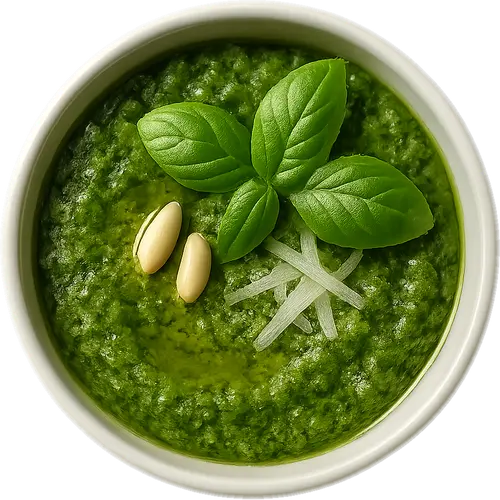
Introduce the cooled toasted Pine Nuts and continue to grind or pulse until incorporated and the mixture becomes a coarse, creamy paste.
Stir in freshly grated Parmigiano Reggiano and Pecorino Sardo (Fiore Sardo), mixing until evenly distributed—these cheeses add nuttiness, saltiness and body to the pesto.
Slowly drizzle in Extra-Virgin Olive Oil while stirring or with the processor running, until the sauce reaches a glossy, spreadable consistency; stop when the texture is as loose or thick as you prefer.
Taste and adjust seasoning with more Sea Salt if needed. Use the pesto immediately with hot pasta (reserve some pasta water to loosen if necessary), spread on bruschetta, or fold into roasted vegetables.
To store, transfer pesto to a jar, smooth the surface, and pour a thin layer of Extra-Virgin Olive Oil on top to prevent discoloration; refrigerate for up to a week or freeze in small portions for longer storage.