
Rinse the Dried Soybeans thoroughly, then cover them with plenty of Water in a large bowl and soak overnight (8–12 hours) until plump.
Drain the beans, transfer to a large pot, add fresh water to cover, and simmer gently until the beans are very soft and easily mashed (1–2 hours); drain well.
While still warm, mash or pulse the cooked beans into a coarse paste—some texture is good—then shape the paste into fist-sized blocks (meju) or tightly packed balls.
Wrap each meju block in breathable cloth or cheesecloth and tie securely; place them in a warm, ventilated spot (indoors or in a covered rack) for 2–3 weeks to ferment and dry until firm and slightly moldy in spots (this is normal).
When the meju blocks are fully fermented and dry, break them into pieces and put the pieces into a clean, large fermentation jar or crock.
Dissolve generous Coarse Sea Salt in enough water to make a strong brine (traditional brines are quite salty—about 10–20% salt by weight), and pour the brine over the meju pieces so they are fully submerged.
Add a few whole Dried Red Chili Pepper and Dried Jujube to the jar for aroma and to help deter unwanted bacteria; press everything down so the solids stay under the brine.
Cover the jar with a breathable lid (cheesecloth tied on, or a lid left slightly ajar to release gases) and store in a cool, dark place to ferment for at least 3 months—longer aging (6–12 months) yields deeper flavor.
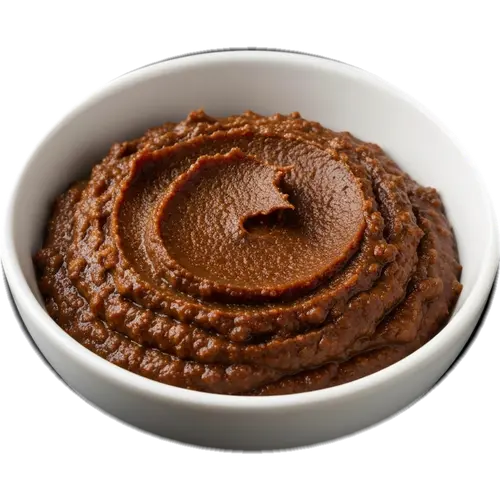
After several months, strain off the brown liquid (this is traditional soy sauce/ganjang) and reserve it. Mash the remaining solid fermented soybeans into a smooth, thick paste—this is your doenjang.
Transfer the paste to a clean jar, top with a little of the reserved brine if desired, seal, and age for additional months in the refrigerator or cool cellar; taste periodically and skim any off aromas or scum if it appears.